
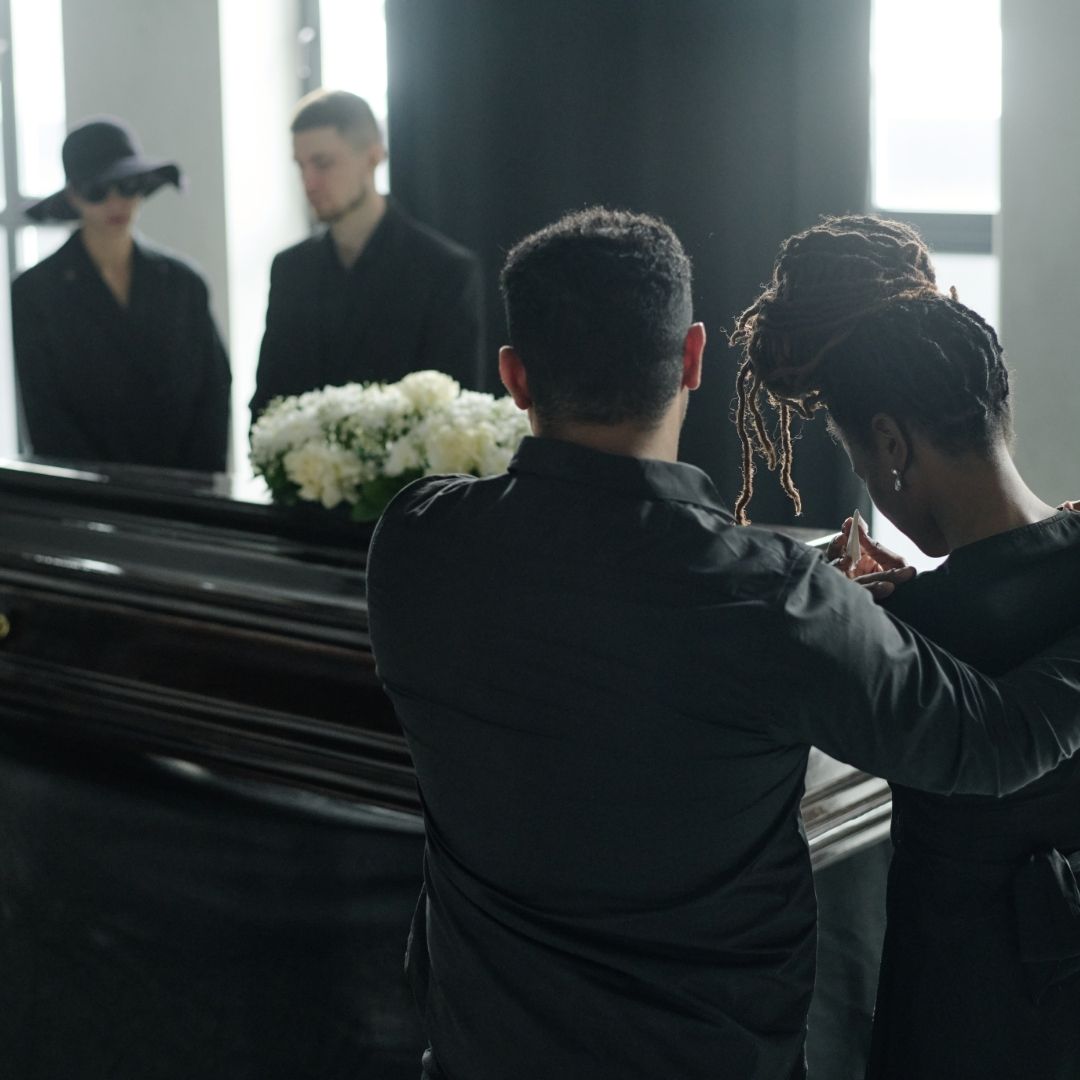
Funerals are never easy. They are also becoming more personalised, with many people choosing less traditional services. Here, we go over the fundamentals of funeral etiquette, including what to do and what to wear.
Clothes
What you wear will depend on the type of service, the wishes of the deceased, and their cultural or religious traditions. If you’re unsure, choosing something simple and respectful is always a safe option. Traditionally, people wear complete black to funerals. Any specific requests are usually mentioned in the obituary or funeral notice. There has been a rise in recent years of people wearing the favourite colour of the deceased to pay extra respect to them and their character. For more guidance on appropriate funeral attire, see Coop’s advice on what to wear.
Seating Arrangements
Immediate family and close friends usually sit at the front, followed by extended family. At a funeral, there is usually no seating arrangement; it is courteous to wait until others have taken their places if you are not a family member or close friend. For additional support on coping with grief and bereavement, visit the NHS website.
Invitations
In most cases, a funeral announcement is an open invitation to everyone who wants to show their respects by attending the funeral. The funeral location is usually mentioned in an obituary or on social media if you find out that someone has passed away. This will indicate whether only close relatives and friends will attend the private service. If you’re unsure whether to attend, you can contact the funeral director for guidance.
What to Say
Mourners might share thoughts or happy memories with others and give their sympathies to the bereaved family at the funeral reception. If you’re unsure what to say, think about what you would find comforting to hear. A few kind words about what you’ll miss, along with a simple expression of sympathy, is always appropriate. Don’t forget to introduce yourself and explain how you know the deceased, if you haven’t met their family before. You can also use our Find a Funeral Celebrant tool to get in touch with local professionals for advice.
Wreaths and Flowers
Many families appreciate receiving funeral or sympathy flowers. Giving flowers, however, might not always be permitted in some religious customs. Close family members often arrange larger floral tributes, while others may choose to send bouquets or make donations instead. In contrast, the immediate family usually provides the flowers placed on the coffin.
If you are planning ahead, you can explore available options through our Funeral Arrangement options.
Contact Funeral Map for help with funeral plans.
